
Influent
Domestic wastewater enters the project-specific treatment arrangement.
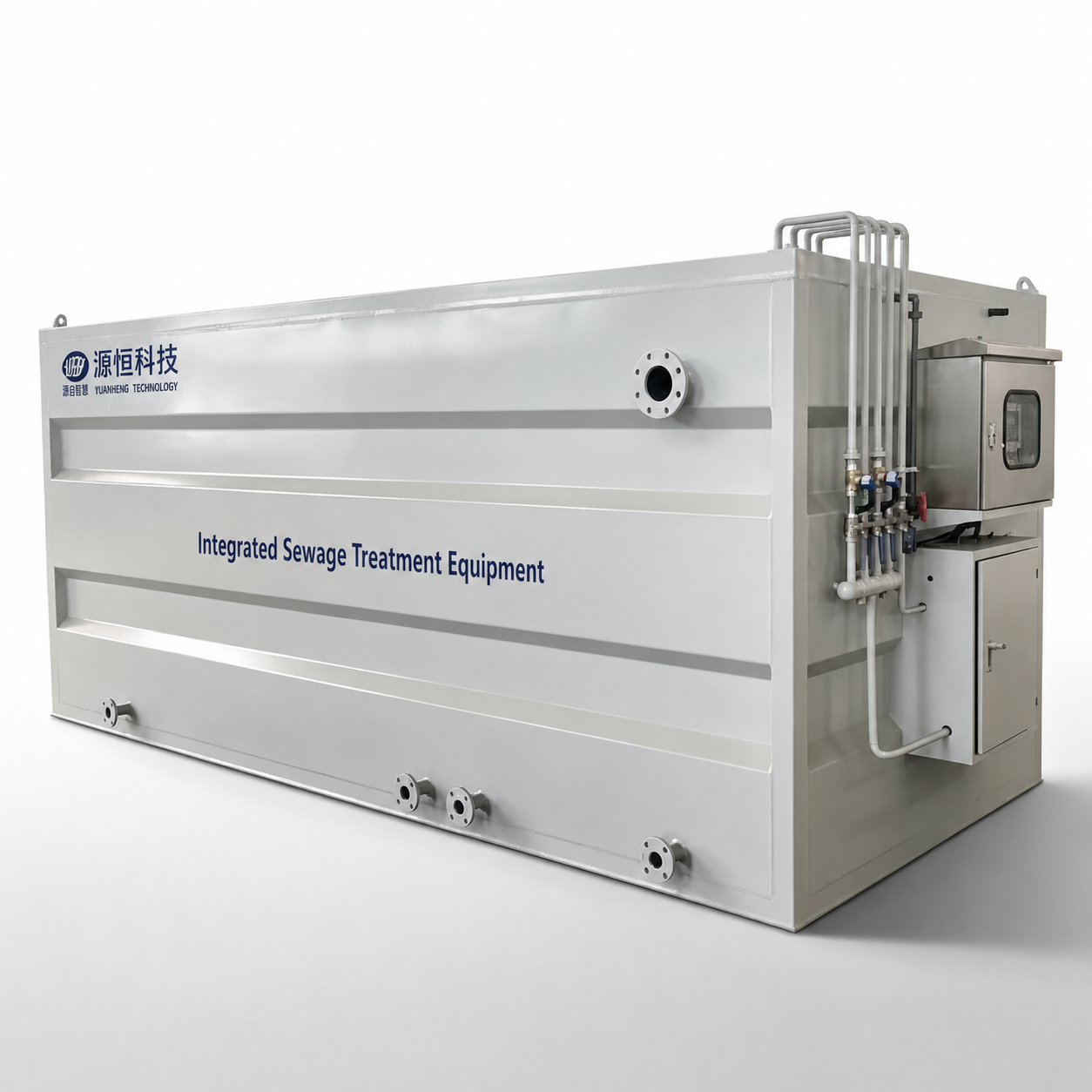
DECENTRALIZED WASTEWATER TREATMENT
Integrated domestic wastewater treatment equipment with a Q235 carbon-steel shell and project-specific corrosion protection. Treatment capacity, process configuration and buried installation requirements are defined around the wastewater, effluent target and site conditions.
Start with your location, daily flow and effluent requirements.
INSIDE THE CONCEPT
A conceptual cutaway connects the inlet, biological treatment zone, aeration, sludge return and outlet within the carbon-steel integrated system.
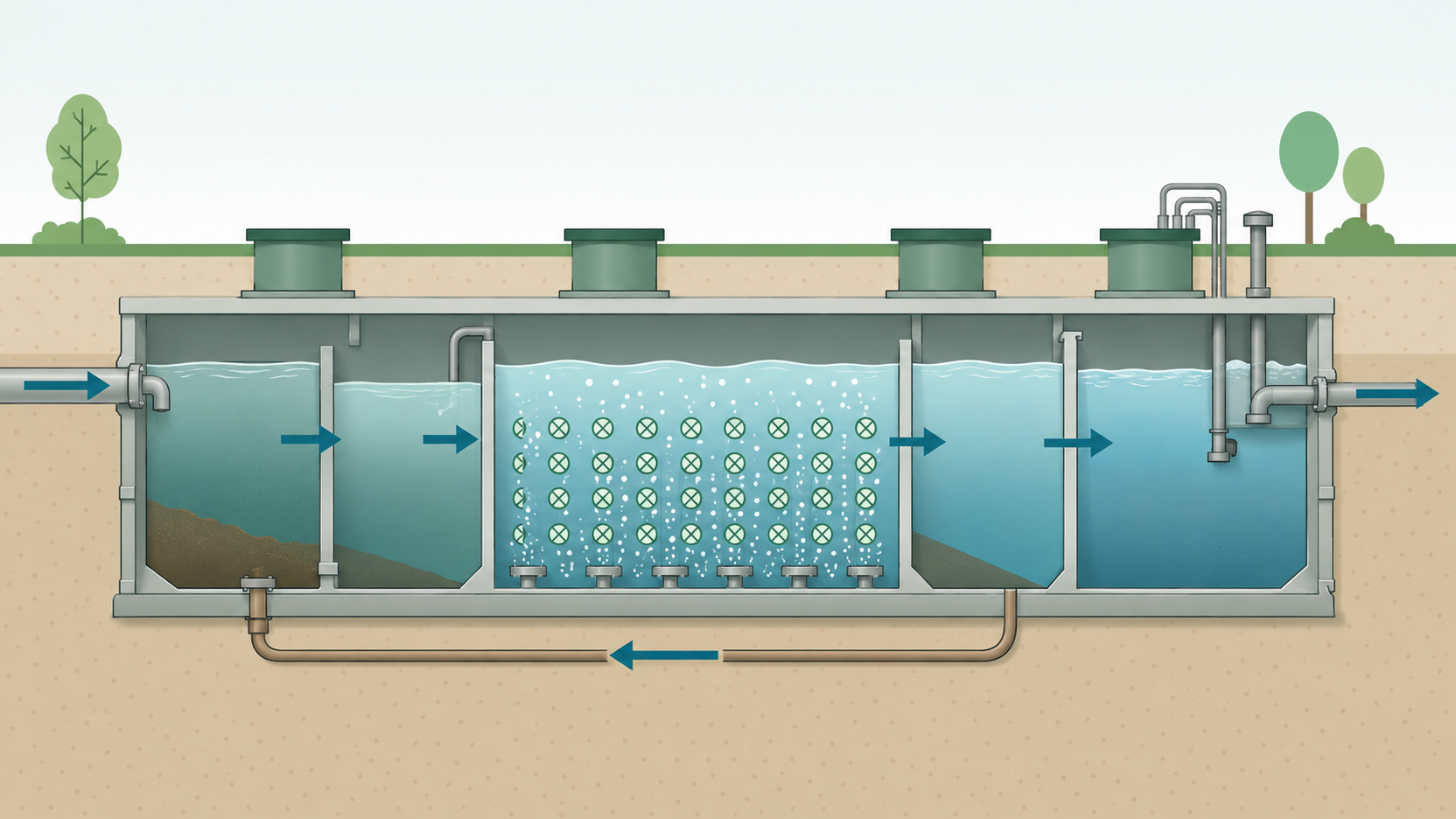
Domestic wastewater enters the project-specific treatment arrangement.
MDS suspended media supports attached biofilm within the biological stage described in the brochure.
Aeration and the brochure-described sludge pre-return concept are finalized in the process design.
Polishing, disinfection and final discharge arrangements follow the agreed project requirements.
01 / A CLEAR DESIGN BASIS
Flow is the starting point. Water quality, the required effluent and site conditions determine the final equipment proposal.
| Design input | What to provide | What it determines |
|---|---|---|
| Design flow | Daily treatment volume (m³/day), peak hourly flow and occupancy pattern. | Capacity and number of treatment units |
| Influent conditions | Wastewater source and available COD, BOD₅, SS, ammonia, pH and temperature data. | Treatment configuration and design basis |
| Effluent target | Required discharge limits or reuse requirements for the project location. | Process stages and any polishing or disinfection |
| Site & installation | Available footprint, inlet/outlet levels, groundwater, burial depth and surface loads. | Dimensions, foundation and coating protection requirements |
| Power & operation | Local voltage, frequency, operating hours and preferred control functions. | Electrical specification and operating plan |
| Supply & services | Required equipment scope, inspection, installation support and delivery date. | Quotation, responsibilities and dispatch schedule |
No water-quality report yet? Share the site type, population or occupancy and any known flow information so the required design inputs can be discussed.
Send your project requirements ↗02 / DEFINE WHAT IS INCLUDED
Confirm the treatment arrangement and supply boundary before ordering. The technical proposal should identify each included unit and service.
Agree the process arrangement, design flow, influent assumptions and effluent targets. The final proposal identifies the included treatment stages.
Confirm whether pumps, aeration equipment, control panels and any disinfection or polishing equipment form part of the supply.
Agree the inspection scope, available documentation, commissioning support and acceptance method before the order is confirmed.
Design basis · Process flow diagram · Equipment schedule · Installation interfaces · Electrical requirements · Inspection and acceptance conditions
03 / PREPARE THE SITE
A buried installation needs a site-specific plan for structural support, service access and ongoing operation.
04 / DECENTRALIZED PROJECTS
For domestic wastewater projects outside centralized sewer coverage, with suitability assessed against the actual wastewater and site requirements.
Homes & housing developments
Plan around service population, daily flow and the local discharge requirements.
Decentralized collection
Review collection arrangements, site access and operation resources for a local treatment solution.
Variable occupancy
Account for occupancy peaks and identify kitchen wastewater or other pretreatment needs.
Scheduled daily use
Consider operating hours, term-time changes and available maintenance support.
BEFORE YOU ORDER
YHWJ-A is configured to the project requirements. Send your daily and peak flow; capacity, dimensions and equipment selection are confirmed in the technical proposal.
The project-specific effluent targets and acceptance conditions must be agreed against influent quality, loading, temperature and operation. This page does not state a universal discharge guarantee.
Disinfection is confirmed as part of the project scope where required. Do not assume it is included without the agreed equipment and process schedule.
The coating or lining system, surface preparation, repair requirements and inspection method must be agreed for the soil, groundwater and installation conditions.
Routine inspection, equipment servicing and sludge management requirements are set by the final configuration. Confirm installation guidance, biological start-up, operator training and commissioning responsibilities in the quotation.
Dispatch timing is confirmed after the design, scope and agreed payment conditions are settled. Shipping, installation and commissioning periods are considered separately.
Share your site and treatment requirements. If a value is unknown, enter “Please advise”.